

Future viability at STOLL
Foto: Fritz Städele
We shape responsibility across generations.
As a family business, we are part of society and, through our entrepreneurial activity, bear responsibility for the whole. For more than 13 years, we have been developing our company with the ambition of creating lasting impact — economically stable, socially responsible and capable of learning in a changing world.
The foundation for this is the Open System Model developed by Kambiz Poostchi, which shapes our organisational operating system in both thinking and action. It helps us understand the company as a living, open system: embedded in society, the market and the environment, in constant exchange with its surroundings. In this way, we cultivate stability and adaptability in equal measure and consciously lead by example in the necessary paradigm shift from “me” thinking to “we” thinking.
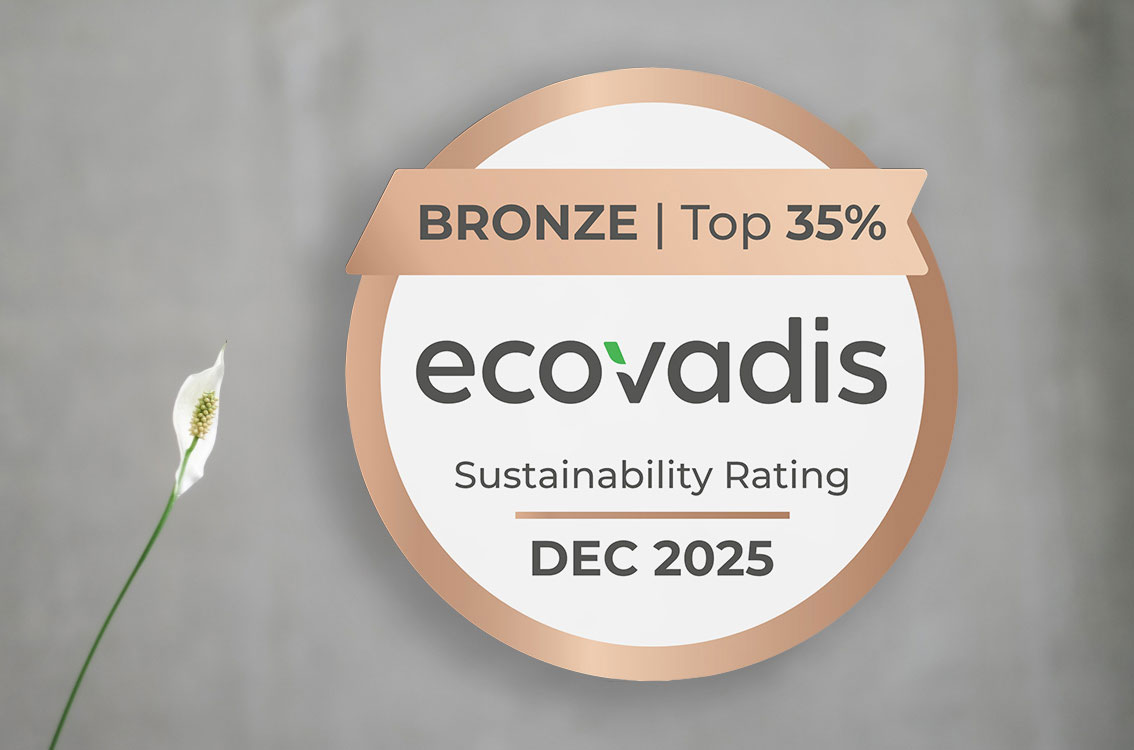
The Economy for the Common Good makes this systemic ambition visible and measurable. It shows how our actions affect employees, customers, suppliers, society and the environment, and creates transparency about what is working and what we want to develop further. At the same time, this allows us to align with our customers’ growing sustainability requirements, for example within the framework of EcoVadis.
This is how future viability becomes something we can actively shape: as a continuous process of learning and development that integrates responsibility, discloses impact, and enables sustainable prosperity for current and future generations.
CONTRIBUTING TO THE GREATER WHOLE
In this understanding, future viability arises where companies do not focus on isolated measures, but continuously evolve in their contribution to the greater whole. This is precisely what has shaped us as a family business for three generations: we do business across generations, guided by values and with the ambition of creating lasting benefit for society.

ECONOMY FOR THE COMMON GOOD
The Economy for the Common Good (ECG) helps us make this ambition visible and measurable. It helps us identify blind spots, embed sustainability systematically and view impact holistically, across our stakeholder groups of employees, customers, suppliers, owners and society. In this way, the ECG complements our OSM understanding: from thinking in deficits to thinking in potentials and syntropy, from isolated action to networked, responsibility-oriented collaboration.
REINFORCED BY ECOVADIS
Our participation in EcoVadis also strengthens this path. The external assessment shows clearly where we are already acting responsibly and where we want to develop further. In this way, we combine OSM principles, such as cooperation, belonging and systemic maturity, with a recognised sustainability standard that creates transparency towards customers, partners and society.
CREATING LONG-TERM VALUE
By bringing together sustainability, the ECG and the OSM, we create a clear framework for business decisions in a world full of dynamism and complexity. We design solutions that serve people, meet society’s needs and create long-term value within the system, for the system, and out of responsibility towards the whole.
DO YOU HAVE QUESTIONS OR WOULD YOU LIKE TO DISCUSS THIS WITH US? PLEASE GET IN TOUCH.
FEEL FREE TO CONTACT US.
WE LOOK FORWARD TO HEARING FROM YOU.
Give us a call or send us an e-mail:
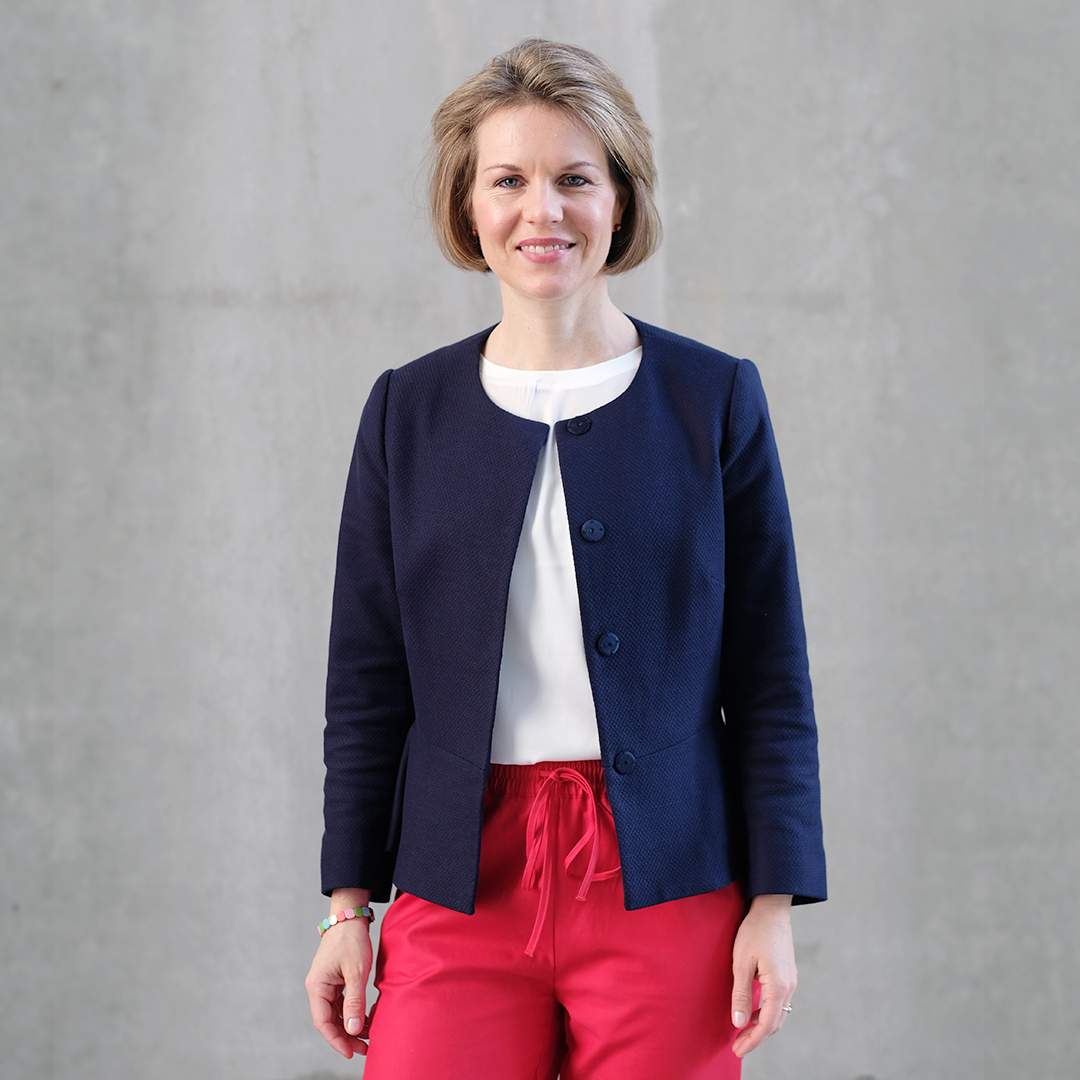
Sylvia Rehm
Nachhaltigkeitsmanagement
+49 8379 92090
s.rehm@stoll-gruppe.de

